
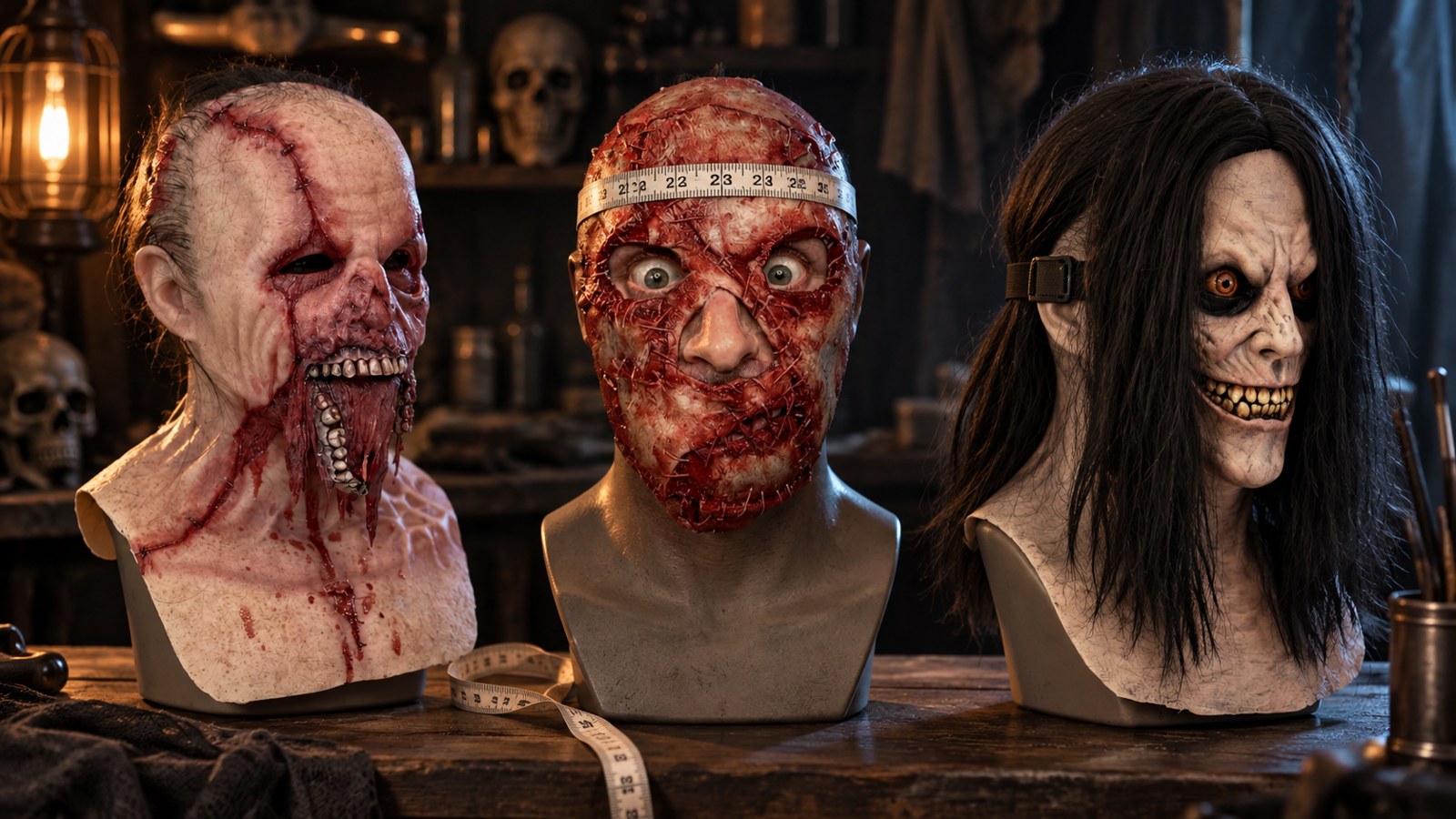
A mask can look terrifying in a product photo and still ruin the costume if it slides over your eyes, pinches your nose, or rotates every time you turn your head.
The short answer: measure around your brow and the widest part of the back of your head, compare that number with the maker's stated fit range, and then compare silicone and latex mask construction. A fitted silicone mask should sit close enough to follow your facial movement. A full-head latex mask can be roomier, but it still needs stable eye, nose, and mouth alignment. A half-mask with an elastic or adjustable closure gives you more flexibility, especially when a fixed full-head mask falls between sizes.
Do not treat “one size fits most” as a measurement. It is a starting point. The right mask is the one that stays oriented, lets you see and breathe clearly, and remains comfortable with your wig, hood, glasses, costume collar, or other gear in place.
Halloween Mask Fit at a Glance
| Check | Good fit | Warning sign |
|---|---|---|
| Head circumference | Falls within the published range | No size information, or your measurement is outside the range |
| Eyes | Openings remain centered when you turn and nod | Mask drops, twists, or blocks peripheral vision |
| Nose and mouth | Openings stay clear and breathing feels unrestricted | Material presses against the nose or mouth |
| Crown and chin | Mask sits at its intended height | Extra space makes it bob; short length pulls upward |
| Neck opening | Lies naturally with the costume collar | Feels tight, bunches badly, or lifts the whole mask |
| Facial movement | Silicone or moving-mouth design responds naturally | Features sag, shift, or fail to follow the wearer |
| Closure | Strap, laces, or rear opening holds without painful pressure | Closure is maxed out, loose, or digging into skin |
| Full-costume test | Vision and comfort remain stable for the planned wear time | Wig, hood, glasses, or collar changes the fit |
Step 1: Measure Your Head the Way the Product Page Does
For most masks that publish a size, the key number is head circumference around the brow.
Use a flexible tailor's tape. Place it across the forehead roughly an inch above the eyebrows, pass it above the ears, and continue around the widest part at the back of the head. Keep the tape level and comfortably snug. Do not pull it so tight that it compresses your hair or skin.
Take the measurement two or three times. If the numbers vary, check the tape position in a mirror or ask someone to help. Record the largest consistent measurement in inches and centimeters.
Why be so exact? One inch can be the difference between a mask sitting securely and a mask riding upward whenever you speak.
Measure over what you will actually wear
Measure your bare head first. Then take a second measurement if the costume requires anything beneath the mask, such as:
- A thin wig cap
- A fabric hood or balaclava
- Hearing protection approved for your venue
- A head-mounted microphone or earpiece
- Braids, thick hair, or a secured ponytail
Do not measure over a bulky wig unless the mask is specifically designed to cover it. In most cases, the wig belongs outside the mask, and forcing extra material underneath can distort the face, close the eye openings, or strain the mask.
Circumference is not the only useful dimension
Head circumference is the most common measurement, but full-head masks can also feel too short or too long. If a product supplies additional dimensions, compare them with:
- Crown to chin: from the top center of the head to the underside of the chin
- Front to back: from the brow to the widest rear point
- Neck circumference: useful for fitted necks and narrow openings
- Eye spacing: especially important when the openings are small or deeply sculpted
If a product page does not publish the dimension you need, ask the retailer before ordering. A photograph cannot tell you whether the eyes will align with your face.
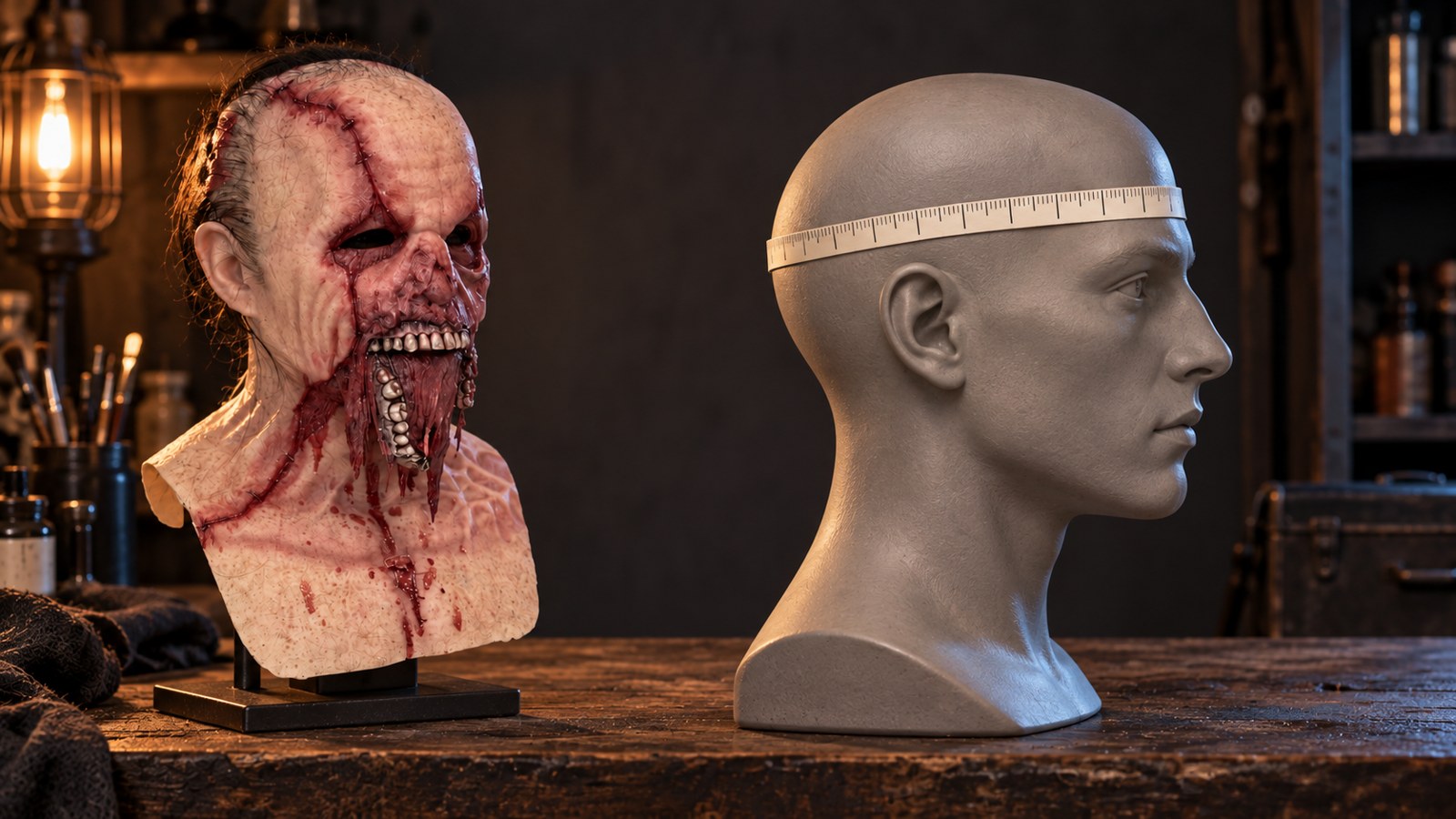
Step 2: Identify the Mask's Fit System
Two masks labeled “adult” may fit completely differently. Before comparing characters, determine how the mask is meant to stay on your head.
Fixed-size full-head masks
A fixed full-head mask pulls over the head and surrounds the face, crown, sides, and back. The sculpt, thickness, internal volume, and neck opening all affect the fit.
This style creates a complete character with no visible rear strap. It also gives you the least room to correct a major size mismatch. A small amount of extra interior space may be manageable, but a mask that rotates or collapses over the eyes is not a working fit.
The “Butcher” Silicone Mask is a useful example because its product page publishes a specific fit range: 21 to 23.5 inches around the brow. That is the kind of information to compare with your own measurement before buying. The mask was listed at $749.99 when this article was prepared, and it is made to order with an estimated production time of 8–12 weeks, with possible peak-season delays.
Adjustable lace-back masks
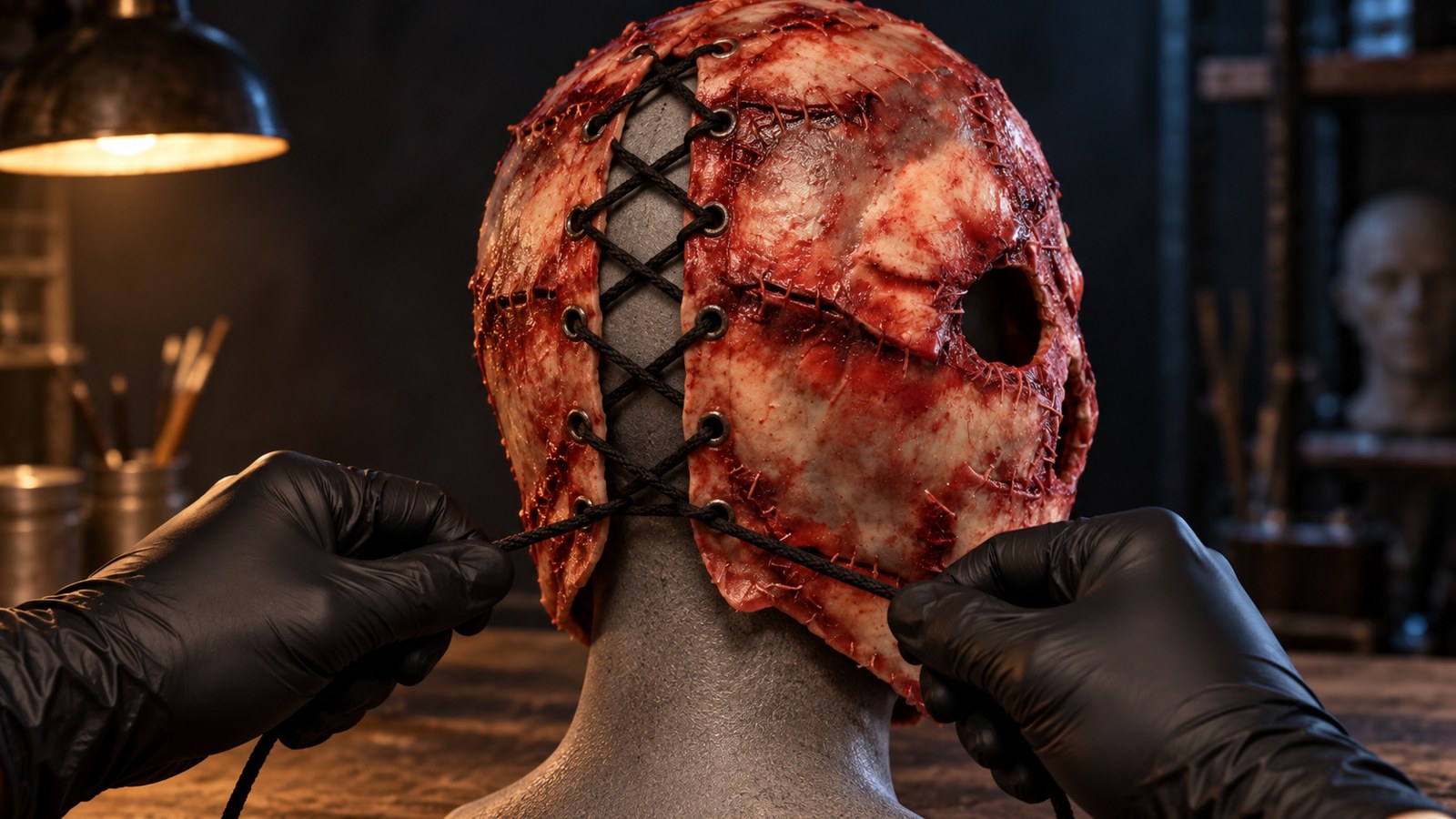
A lace-back design opens at the rear and tightens after the mask is in position. It can accommodate a wider range of heads and lets you tune the tension around the face.
The Stitched Skin Silicone Mask uses hand-stitched silicone pieces over a Lucha-style base and laces up the back to adjust the size. The product page describes it as one size fits most, and it was listed at $349.99 when checked. The closure adds flexibility, but it does not eliminate the need for a fit test: tighten the laces evenly, keep them from tangling with hair, and confirm that the eyes remain aligned after you move.
Half-masks with elastic straps
A half-mask covers the front of the face and uses a strap or harness rather than enclosing the entire head. It is often lighter, easier to put on, and more forgiving of head-size differences. The tradeoff is that the strap or the back of the wearer's head may need to be hidden with hair, a hood, or other costume pieces.
The Psycho Deluxe HD Studios Pro Halloween Mask is a half-mask with attached hair, a full bib, and an elastic strap. The page calls it “one size fits all” and emphasizes its lighter construction. It was listed at $99.99 and available for preorder when checked. Treat the flexible strap as an advantage, not a guarantee: the mask still needs to sit at the correct height without excessive tension.
Roomier full-head latex masks
Many character masks use a traditional full-over-the-head construction. These can feel less close-fitting than silicone, which may be welcome for a short costume appearance or static photo, but room inside the sculpt does not automatically mean a better fit.
The Cellar Dweller HD Studios Pro Halloween Mask is listed as a full, over-the-head design and was priced at $94.99 when checked. Its page does not publish a numerical head-size range. That is a signal to contact the seller if you have an especially small or large head, wear glasses, or need the mask for repeated actor use. Ask for dimensions rather than assuming the word “full-head” answers the fit question.
You can compare these constructions and current availability in The Horror Dome's Halloween Masks collection.
Step 3: Match the Material to the Fit You Need
The right size depends partly on what the mask is made from and how it is supposed to behave.
Silicone masks need a closer, more deliberate fit
Silicone masks are often designed to move with the wearer's face. For that effect to work, the interior needs consistent contact in the correct places. Too much space can make the mask lag behind your expressions. Too little space can create uncomfortable pressure and stretch stress points.
If a silicone mask publishes a circumference range, respect it. Do not buy outside the range on the assumption that the material will stretch enough. A premium mask is not the place to improvise.
Also check the production timeline. A made-to-order silicone mask may require weeks to produce, so a September sizing mistake can become an October costume emergency. Measure first, clarify uncertainties, and order only after you understand the fit and return terms.
Latex masks may feel roomier, but alignment still matters
Latex has flexibility, and many full-head latex masks are built with interior room. That can make them easier to pull on, yet the wearer still needs the sculpt to remain centered.
If the mask is too large, it may rotate on the head, bounce while walking, or sink until the eye openings sit below the eyes. If it is too small, it may distort around the eyes and mouth, pull at seams or thin sections, and become uncomfortable quickly.
Anyone with a known latex sensitivity should confirm the material before purchase and choose an appropriate alternative with guidance from a healthcare professional if needed. Do not assume a mask is latex-free because the product page uses a broad phrase such as “top-quality materials.”
Foam, plastic, fabric, and hybrid masks follow different rules
A rigid plastic mask cannot stretch to compensate for a mismatch. A soft foam mask may have a fixed interior shape even if the outside looks oversized. Fabric hoods can adapt to more head sizes but may shift unless the face section is secured. Hybrid masks combine components, so the closure matters as much as the decorative shell.
The lesson is simple: compare masks by construction, not just by the age or “one size” label.
Step 4: Perform a Seven-Point Fit Test
When the mask arrives, inspect it first and review the seller's return or exchange policy before making any modification. Then perform this test indoors with another person nearby.
1. Put it on without forcing it
Follow the maker's instructions. Remove earrings and sharp hair accessories. If it is a pull-over mask, stretch only where the design permits and guide it over the head slowly. If it uses a strap or laces, loosen them before positioning the face.
Stop if the material feels as though it may tear or if you cannot remove the mask easily.
2. Center the eyes
Stand in front of a mirror. Look straight ahead, then left, right, up, and down. The openings should remain in a usable position without the mask sliding.
The U.S. Consumer Product Safety Commission advises that eye and nose openings in Halloween masks should allow full visibility and adequate breathing. That safety test matters more than a perfectly seamless costume. If the mask blocks your view, do not wear it for walking, stairs, driving, or an active haunt route.
3. Check breathing and speech
Take several normal breaths. Speak a few sentences. The nose and mouth openings should stay clear, and the material should not be drawn against your nostrils or lips.
Feeling panicked, overheated, dizzy, short of breath, or unusually restricted is a reason to remove the mask immediately. Never rely on “getting used to it” when breathing feels compromised.
4. Turn, nod, and bend
Slowly turn your head from side to side, look down, look up, and bend as if picking up a dropped prop. A good fit returns to center. A loose mask may rotate while your head moves inside it; a tight mask may pull painfully at the neck or eyes.
5. Test the jaw and facial movement
Open and close your mouth. Smile, frown, and speak. This is essential for silicone and moving-mouth designs. Watch whether the mask follows naturally or shifts out of place.
6. Add the complete costume
Put on the hood, wig, collar, shoulder pieces, gloves, and any eyewear you plan to use. Costume parts interact. A high collar can push a bib upward; a wig can catch a lace closure; a hood can press the mask down over the eyes.
7. Wear it for a controlled trial
Start with five minutes in a cool, safe room. Remove it and check for painful pressure, skin irritation, fogging, or deep marks. If everything feels normal, conduct a longer rehearsal appropriate to the intended use. An actor working repeated scenes needs a different comfort standard from someone wearing a mask for one photograph.
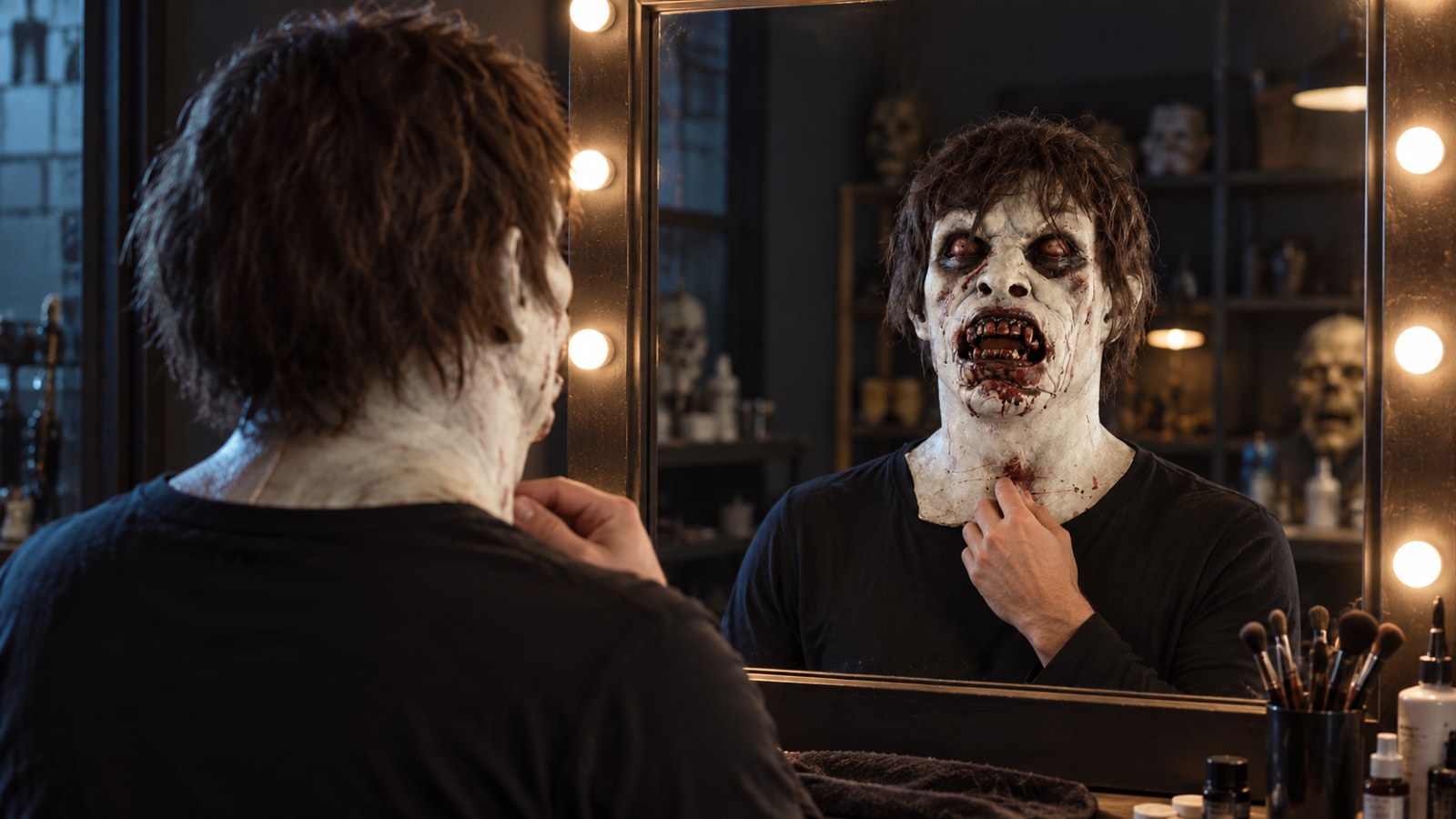
What If the Halloween Mask Is Too Big?
First, determine whether it is slightly roomy or fundamentally the wrong size.
A slightly roomy full-head mask may remain usable if the eyes stay aligned and the maker approves removable interior padding. Small pieces of clean, nonabrasive foam are sometimes positioned at the crown, temples, or rear of the head to stabilize a mask. Any padding must be secure, removable, and kept clear of the eye, nose, mouth, and ventilation openings.
Do not stuff the mask with loose tissue, towels, or material that can shift over your face. Do not glue permanent padding into an expensive mask until you have confirmed the fit method, material compatibility, and return policy.
If the mask rotates, falls over your eyes, or requires so much padding that the face sits far from your own, exchange it or choose a different construction. An adjustable lace-back or strap-mounted half-mask may solve the problem more cleanly than modifying a fixed full-head design.
What If the Halloween Mask Is Too Small?
A mask is too small when it creates painful pressure, distorts the sculpt, pulls the eye openings away from your eyes, presses against your nose or mouth, or is difficult to remove safely.
Do not cut the neck, eye holes, or rear seam as your first response. Cutting can weaken the material, damage a hand-finished piece, void return options, and create rough edges. Silicone masks in particular should be altered only with guidance from the maker or a professional who understands the specific material.
Instead:
- Remove anything worn beneath the mask that is not essential.
- Confirm that you are putting it on correctly.
- Loosen every intended adjustment point.
- Compare your head measurement with the published range again.
- Contact the retailer about exchange, dimensions, or approved alterations.
If your measurement falls outside a fixed range, choose another mask. The character may be perfect, but the wrong size will not become comfortable through determination.
How Should a Mask Fit With Glasses?
Do not assume a full-head mask will accommodate glasses. The temples can create pressure points, the lenses may fog, and the frame can shift during removal. A mask that fits your head may still be incompatible with your eyewear.
Ask for internal measurements before purchase and test the exact glasses with the mask in a safe setting. Never trim a mask around the frame without approval. If you use prescription eyewear, discuss workable options with an eye-care professional rather than sacrificing clear vision for the costume.
Hearing aids, piercings, and headsets also require extra space and careful removal. Build those needs into the purchase decision.
Does “One Size Fits Most” Mean It Will Fit You?
No. It means the product was designed to accommodate a broad target group, often through material flexibility, interior room, or an adjustable closure. It does not mean every adult head, face shape, hairstyle, or accessory will fit.
When you see that phrase, look for the mechanism behind it:
- Elastic strap: How far does it stretch, and can it be adjusted?
- Laces: What is the practical closed-to-open range?
- Flexible hood: Does the face still align when stretched?
- Large interior cavity: Will a smaller head need approved padding?
- Rigid shell: Is the “one size” based only on the strap?
If the listing does not answer those questions, contact the seller. That is especially important for premium masks, limited releases, and made-to-order pieces.
A Real-World Fit Example
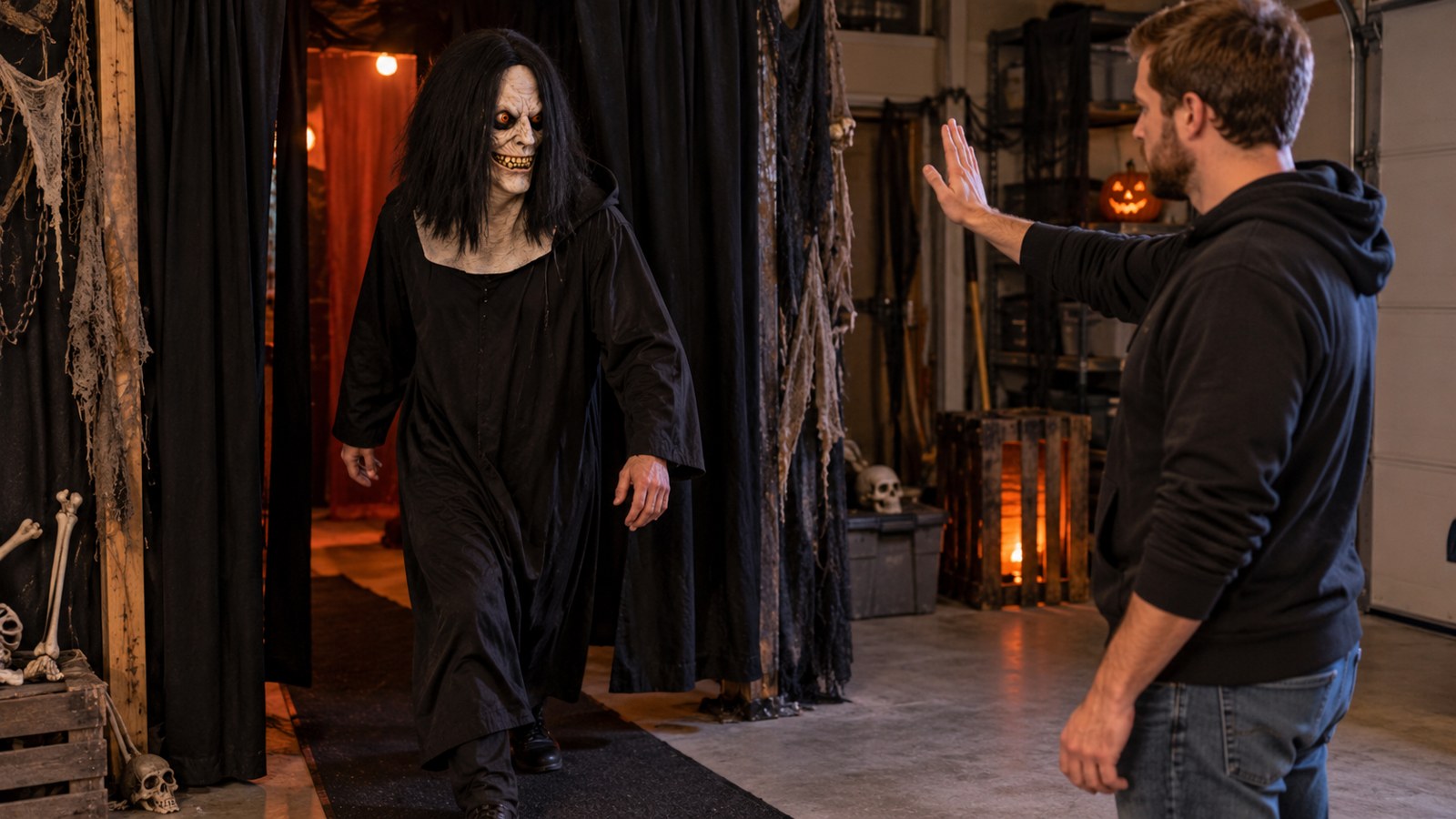
Imagine you are preparing an actor for a Lafayette garage haunt on a cool October night. The mask fits during an afternoon test with a T-shirt. After dark, the actor adds a thermal layer, a hood, and a high costume collar. Now the collar pushes the mask upward, the hood presses it forward, and the eye openings sit too low whenever the actor turns.
The head measurement did not change. The system around the mask did.
The fix is to rehearse the complete costume under realistic conditions. Have the actor walk the route, duck through the doorway, turn toward guests, deliver lines, and remove the mask without help. Check the fit again after ten minutes, because heat and moisture can change comfort even when the size is technically correct.
That rehearsal catches problems a product-page measurement cannot.
How to Choose Between Two Masks When Both Seem to Fit
If both options accommodate your measurement, choose based on the job the mask must do.
For a moving scare actor
Prioritize stable vision, low movement on the head, clear breathing, and a closure that survives repeated turns and gestures. Test it with the full costume and venue lighting.
For a premium close-up character
A fitted silicone mask may deliver stronger facial movement and realism, but the published size range and production time matter. Measure carefully and clarify every fit question before ordering.
For a party or shorter appearance
A lighter half-mask with an elastic strap may be easier to manage. Make sure the strap does not create painful pressure and that the costume conceals the sides and rear if the design requires it.
For display or collecting
Wearability may be secondary, but do not assume a collectible mask can later serve as actor gear. If you may wear it in the future, evaluate fit now and store it according to the maker's instructions.
Questions to Ask Before You Buy
When a listing does not include a full size chart, send the retailer a short, specific message:
- What head-circumference range does this mask fit?
- Where should I measure—around the brow, above the ears, or elsewhere?
- Is the mask fixed-size, stretch-fit, lace-back, or strap-adjusted?
- What are the crown-to-chin and front-to-back interior dimensions?
- Will the eye openings accommodate my eye spacing?
- Is removable interior padding recommended if the mask is slightly large?
- Can the mask accommodate glasses or a thin hood?
- What is the return or exchange policy if the unmodified mask does not fit?
- Are alterations available or approved?
- Is the item in stock, a preorder, or made to order?
Specific questions are easier to answer and give you useful information before a high-season deadline.
Final Halloween Mask Sizing Checklist
Before ordering:
- Measure around the brow and widest part of the head at least twice.
- Record inches and centimeters.
- Identify the construction: fixed full-head, lace-back, strap-mounted, or another system.
- Compare your number with the published range.
- Ask for missing dimensions if you are near a limit.
- Confirm the material, production time, current availability, and return policy.
After delivery:
- Inspect the mask before modifying it.
- Center the eyes, nose, and mouth.
- Test breathing, visibility, speech, head turns, and jaw movement.
- Add the entire costume and test again.
- Conduct a short controlled wear trial.
- Use only maker-approved fit adjustments.
- Remove the mask immediately if vision, breathing, or comfort becomes unsafe.
The best Halloween mask is not simply the most frightening face. It is the one you can wear with control. Measure before you order, choose the right fit system, and test the complete costume before guests arrive.
Frequently Asked Questions
How do I measure my head for a Halloween mask?
Wrap a soft measuring tape around your brow, roughly one inch above the eyebrows, above the ears, and around the widest part of the back of your head. Keep it level and comfortably snug. Repeat the measurement and compare it with the product's published range.
How tight should a Halloween mask be?
It should stay centered when you turn and nod without painful pressure. The eye, nose, and mouth openings must remain properly aligned. A silicone mask may fit closer than a traditional full-head latex mask, but neither should restrict breathing or usable vision.
Can I make a Halloween mask smaller?
A slightly roomy mask may accept removable padding at the crown or sides if the manufacturer recommends it. Never block breathing or vision openings, and do not add permanent padding until you confirm material compatibility and return terms.
Can I stretch a Halloween mask that is too small?
Do not count on stretching a mask beyond its stated range. Forced stretching can distort the sculpt or damage the material. Contact the retailer about an exchange, approved adjustment, or a different construction.
Are silicone masks one size fits all?
No. Some silicone masks publish a specific circumference range, while others use adjustable systems. Check the individual product page. For example, The Horror Dome's Butcher mask lists a 21–23.5-inch brow circumference, while Stitched Skin uses an adjustable lace-up back.
Can I wear glasses under a Halloween mask?
Sometimes, but only if the mask has enough interior room without pressing or shifting the frames. Fogging and restricted vision are also concerns. Ask for measurements and test your exact eyewear in a safe setting before wearing the costume in public.
Is a full-head mask better than a half-mask?
Neither is automatically better. A full-head mask creates a complete character, while a half-mask is often lighter and more adjustable. Choose based on fit, visibility, wear time, movement, and how the mask integrates with the rest of the costume.